Elfreth's Alley off 2nd Street is America's oldest continuously inhabited residential street, dating to 1703 — here's how to visit its 32 preserved homes.
Tucked off 2nd Street between Arch and Race, Elfreth's Alley is the oldest continuously inhabited residential street in the United States, and it has been home to real people without interruption since 1703. Thirty-two preserved row houses line a narrow cobblestone lane that once rang with the trades of colonial Philadelphia — shipwrights, silversmiths, glassblowers, and dressmakers who lived above their workshops. Walking it today feels like stepping into an 18th-century block that never got torn down. This guide covers the alley's history, the little museum house, the etiquette of visiting a street where families still live, and the best light for photos, plus how it slots into a full day in Philadelphia's Historic District.
A Street That Has Been Home Since 1703
The alley began as a cart path cut between the Delaware River wharves and the town, opened around 1703 by two blacksmiths, John Gilbert and Arthur Wells. It later took the name of Jeremiah Elfreth, an 18th-century blacksmith and property owner who built and rented several of the houses. For more than 300 years people have lived here without a break, which is exactly what makes the "oldest continuously inhabited residential street" claim hold up. The residents were working-class artisans, and the modest scale of the homes reflects that. Stand at the mouth of the alley and you're looking at a neighborhood that survived the demolition and urban renewal that erased so much of colonial America.
The 32 Houses and Their Georgian and Federal Faces
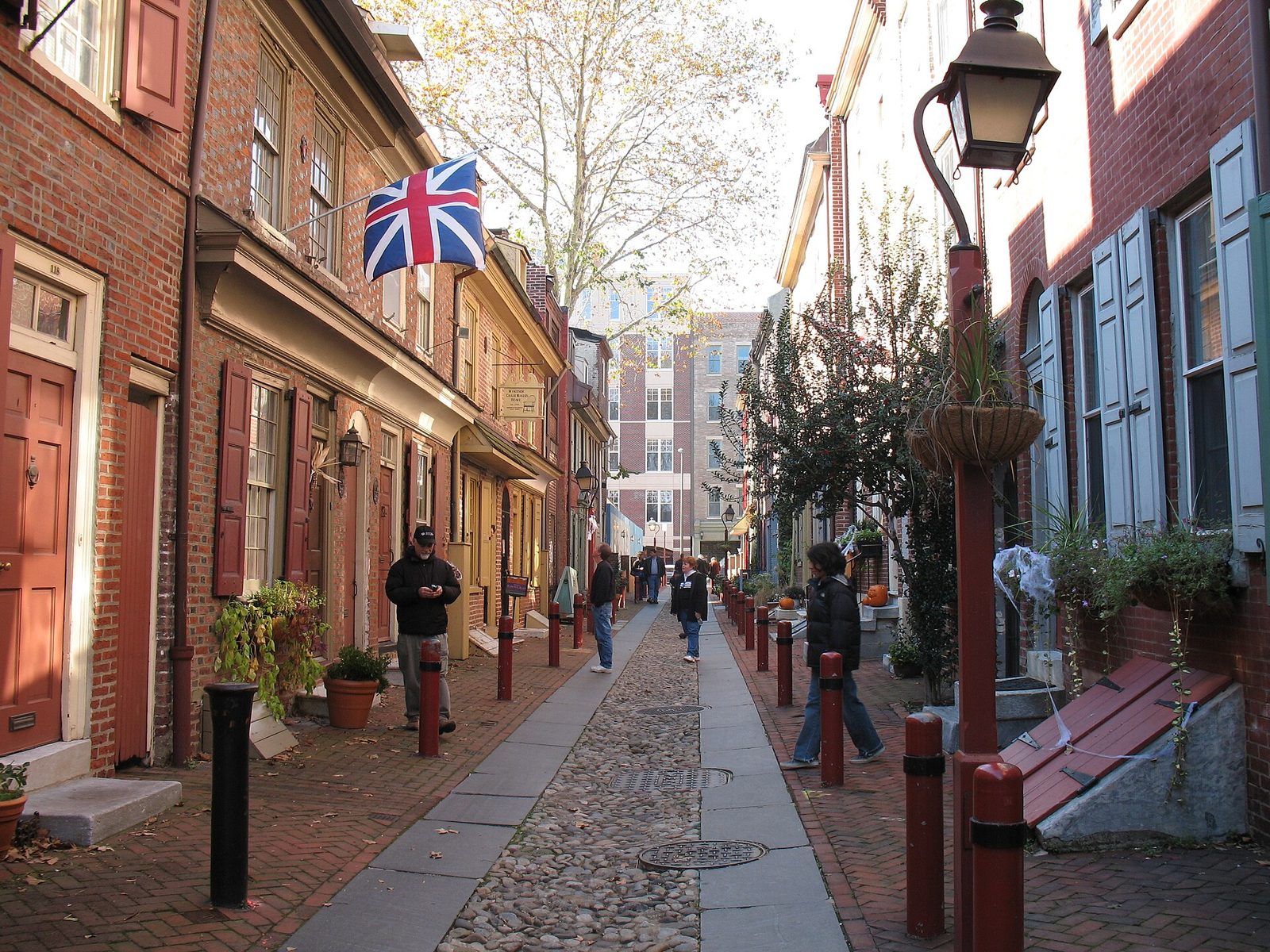
Thirty-two houses remain, built roughly between 1720 and 1830, and they fall into two architectural styles you can learn to tell apart in a minute. The earlier homes are Georgian: symmetrical, plain brick, with simple pent eaves over the first floor. The later ones are Federal: taller, with finer details, fanlights over the doors, and flat stone lintels. Most are two or three stories and only one or two rooms wide, a footprint dictated by narrow colonial lots. Look for the Flemish-bond brickwork, the wooden shutters, and the iron boot scrapers left over from the days of mud and horse traffic.
Cobblestones, Pent Eaves, and 'Busybody' Mirrors
The lane is still paved in its old cobblestones, so wear flat, comfortable shoes and watch your footing when they're wet. Look up near a few upper windows and you'll spot "busybody" mirrors — angled mirrors mounted outside second-story windows that let residents see who was knocking at the door below without leaving their seat, the colonial version of a video doorbell. Don't miss Bladen's Court, a tiny brick courtyard tucked off the alley that feels even quieter and more hidden than the lane itself.
The Museum House at #124-126
The Elfreth's Alley Museum occupies two of the houses, #124 and #126, once home to a pair of colonial dressmakers. A small admission fee gets you inside to see how an ordinary artisan family actually lived, with a period-furnished interior and a colonial garden out back. Hours are seasonal and limited, so check the museum's current schedule before you go, since it often keeps shorter days in the off-season. If the house is closed, the street itself is always free to walk; the museum is the only part that needs a ticket.
This Is a Real Neighborhood, So Be Respectful
Here's the most important thing to understand: people live in almost every one of these houses today, and each doorway is a private home, not a movie set. Keep your voice down, don't sit or stand on the stoops, and never open a gate, step into a garden, or peer through a window. Photograph the houses, not the residents, and don't block the lane. Treating the street as the private homes they are is exactly why it has stayed so well preserved: the community protects it, and visitors are guests.
Fete Day and Deck the Alley
Twice a year the residents open their own doors to the public. Fete Day, usually a weekend in early June, is the signature event: several private homes open for tours, with costumed interpreters, colonial crafts, food, and music filling the street. In December, Deck the Alley lights the block for the holidays with candlelight, carols, and open houses. Both are ticketed and the only regular chance to step inside these private residences, so plan around them if your visit lines up.
Best Photo Spots and Light
For the classic shot, stand at the 2nd Street entrance and shoot straight down the lane so the rows of brick houses recede toward Race Street. Early morning is best: the light is soft, the cobblestones photograph well, and you'll have the alley nearly to yourself before tour groups arrive. Late afternoon works too, when the low sun warms the brick to a deep red-gold. Skip midday in summer, when harsh overhead sun flattens everything and the lane fills with people.
How Elfreth's Alley Fits a Historic District Walk
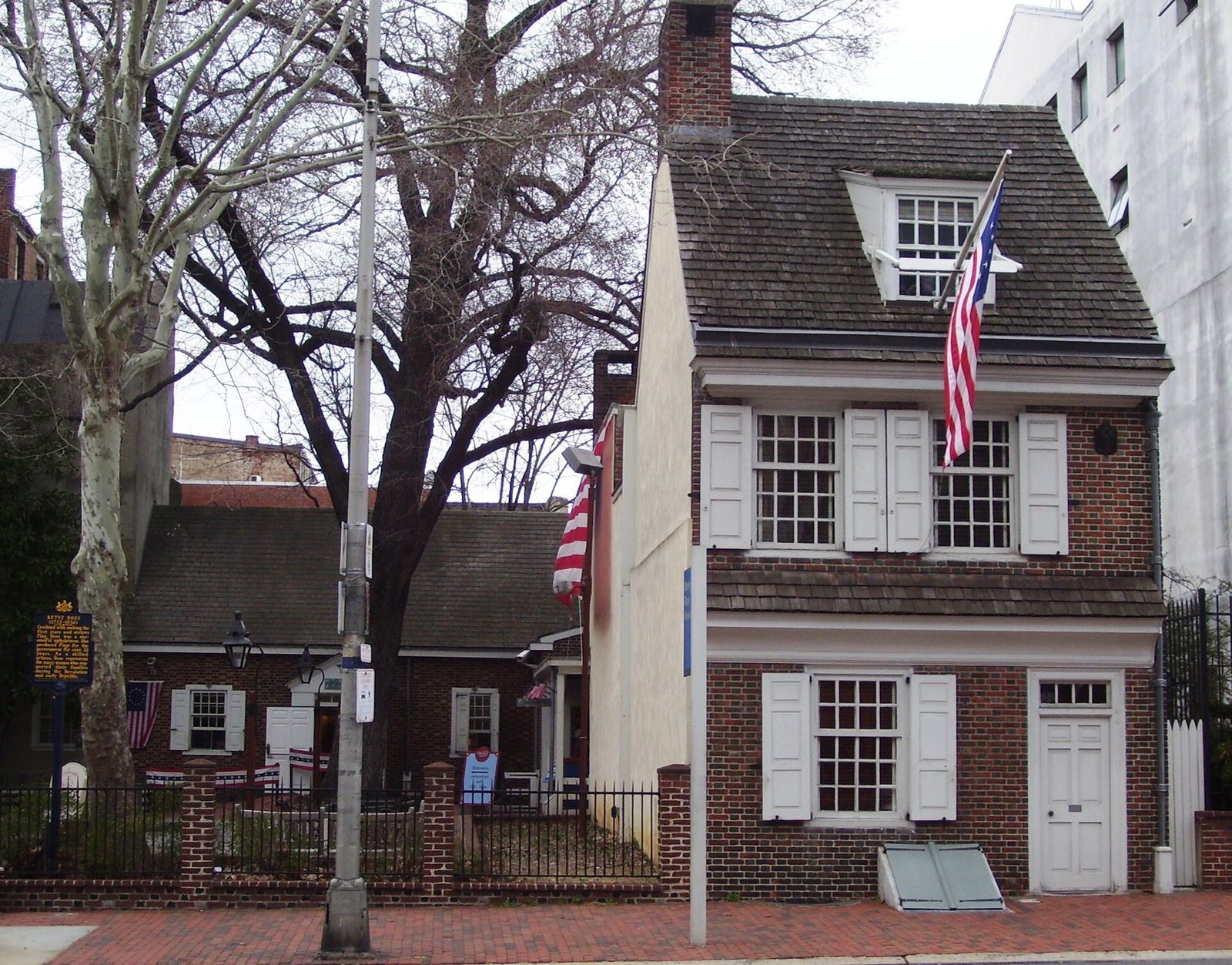
Elfreth's Alley sits at the northern end of the Old City cluster, an easy few blocks from the Betsy Ross House (239 Arch St) and Christ Church, a natural finish to a day of colonial sightseeing. Pair it with our guide to visiting the Betsy Ross House around the corner, and drop both into our walkable Old City historic-sites map. Most of that day still starts at Independence Hall, and because its timed entry is the one thing you truly have to reserve, our reserved Independence Hall ticket locks in your morning slot with a ranger tour, map, and guidebook for $29.99, leaving free gems like Elfreth's Alley for a relaxed afternoon. If you do one thing on the alley, do it slowly: walk to the far end, turn around, and let 300 years of continuous home settle in.
Frequently asked questions
Is Elfreth's Alley free to visit?+
Do people actually live on Elfreth's Alley?+
Why is Elfreth's Alley famous?+
How long does it take to see Elfreth's Alley?+
Book this experience
Stand where it happened.
Reserved Independence Hall entry, a ranger-led Assembly Room tour, the Liberty Bell and a self-guided map to 25+ historic sites — book online with instant confirmation.
Book Independence Hall tickets →